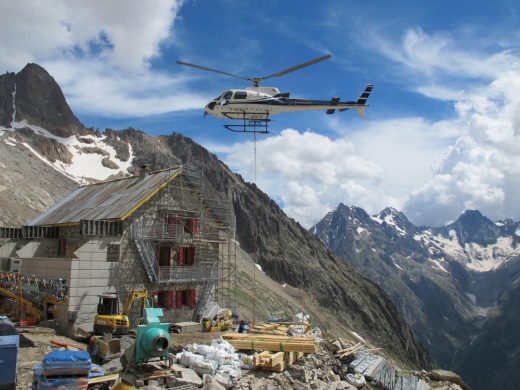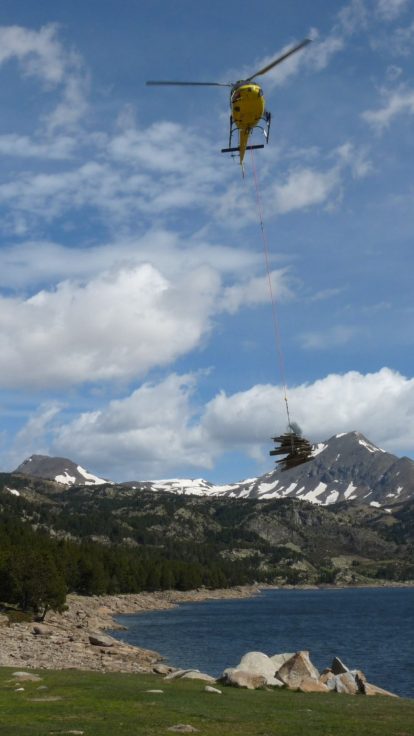
Helicopter lifting transports and places a load under sling at a point that no ground equipment can reach. In the Pyrénées-Orientales, Helicat Pyrénées does not work on deployment: two of our three bases are located there, at Perpignan-Rivesaltes airport and at La Llagonne altiport.
On a mountain worksite, this difference is not measured in kilometers but in weather windows seized. An operation can be decided in the morning and carried out in the afternoon.
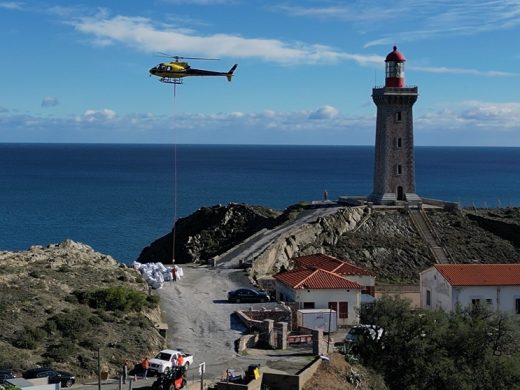
A Department That Ranges from Sea Level to 2,900 Meters
Few territories concentrate so many environments over such a short distance. The Roussillon plain and the coast to the east. The Albères to the south, plunging into the sea. The Conflent and Vallespir in the center, two steep valleys. The Capcir and Cerdagne above 1,500 meters. And the Canigou, dominating it all from nearly 2,800 meters.
For a worksite, this means that the same week may require an urban intervention in Perpignan and a placement on a snow-covered plateau at 2,000 meters.
This also explains the position of our bases. Perpignan covers the plain, the coast, and rapid access to Aude. La Llagonne, in Cerdagne, covers the Capcir, upper Conflent, and the southern slope, without having to climb from the plain.
Two Projects Completed in the Department
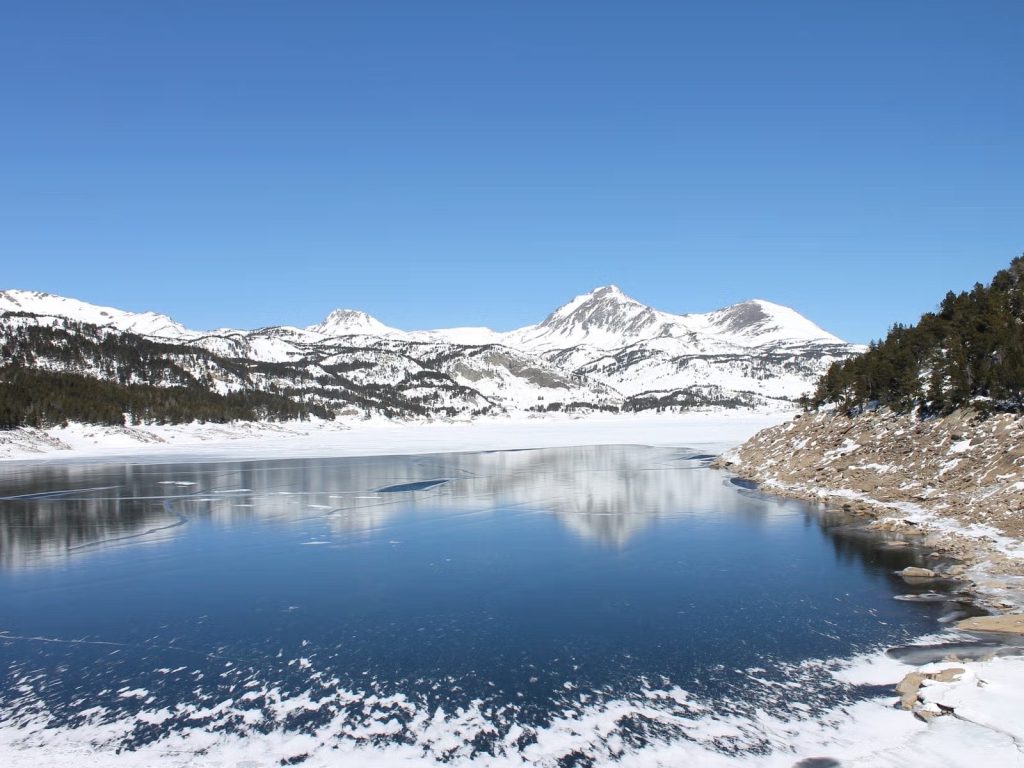
At Lac des Bouillouses, on the Cerdagne plateau at over 2,000 meters, several rotations transported the materials needed to refurbish the hiking footbridges. A high-altitude site, in a protected area, where vehicle access is regulated part of the year.
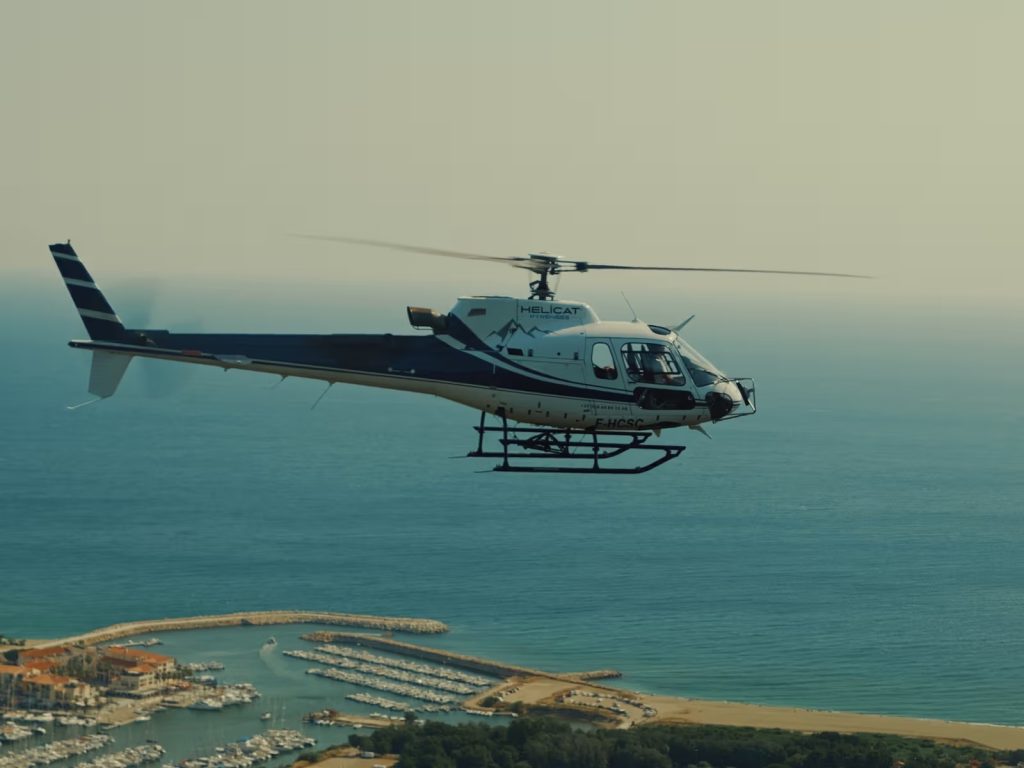
At the Vinça dam, on the Têt, a hydraulic pump was extracted and then transferred by helicopter lifting to a point defined by the facility’s technicians. A precision lift at an operational site, where installing a crane would have blocked the facility.
These two interventions summarize what the department requires: altitude on one side, hydraulic structures on the other.
What Projects Are Carried Out by Air in the 66
Hydroelectricity and Water
The department has several dams and an old irrigation canal network, some of whose structures are perched or at the bottom of valleys.
Mountain Equipment
Refuges, footbridges, trails, summer pasture huts, structures of the Catalan Pyrenees Regional Natural Park, and ski lift pylons at the Capcir and Conflent resorts.
Perched Heritage
Particularly dense here, with sites clinging to rocky spurs without vehicle access.
Networks
Ridge lines and relays, and wall reinforcement work on the valley roads of Conflent and Vallespir.
On the plain and coast, needs change: building roofs, elevated technical elements, structures on sites where ground space is lacking.
What an On-Site Base Changes
Two things, and they matter more than one might think.
Setup time first. On a worksite in Cerdagne or Capcir, the aircraft departs from La Llagonne, not from the plain. This avoided transit shortens the setup accordingly.
Responsiveness second. In the mountains, a weather window opens in the morning and sometimes closes before noon. An operator who must come from far away cannot seize it. From a local base, a worksite postponed three times due to wind eventually gets done.
Permits Are Handled for You
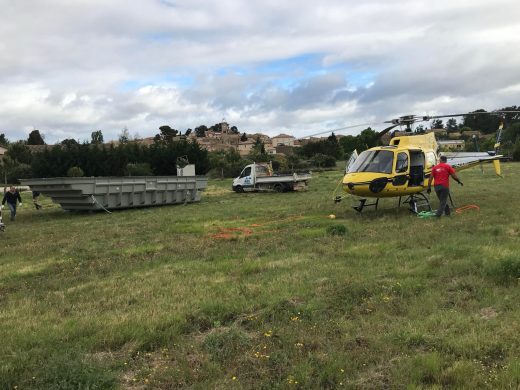
An aerial work flight requires procedures with the DGAC and the prefecture, and notification of residents when the overflight area warrants it. In protected areas, at an operational facility, or during a sensitive period for wildlife, specific authorizations are added.
You do not have to produce any of these documents. The operation then proceeds in four stages:
1
On-Site Survey
2
Permits
3
Slinging with Ground Crew and Radio Coordination
4
Weather Window Confirmed the Day Before
With free rescheduling if conditions do not allow safe flight.
Our flights are operated under specialized operating certificate FR.DEC.0204, which covers aerial work.
See also helicopter lifting in Perpignan, helicopter lifting in Aude, our projects, and our helicopter lifting page.
Frequently Asked Questions About Helicopter Lifting in the Pyrénées-Orientales
From which base do you operate depending on the sector?
Perpignan for the plain, coast, Albères, and lower Conflent. La Llagonne for Capcir, Cerdagne, and upper Conflent, without having to climb from the plain. The choice is made during the survey, based on the placement point and the selected loading area.
How much can you lift at 2,000 meters?
Less than at sea level. Air becomes thinner with altitude and expands with heat, which reduces lift and therefore payload. The same aircraft carries more on a May morning than on an August afternoon. The altitude of the placement point is requested from the first exchange, along with the weight.
Can you work on an operational hydraulic facility?
Yes, the intervention at the Vinça dam was exactly this case. The operation is coordinated with the operator: time slot, possible lockout, safety perimeter, coordination with teams present. The constraint is organizational rather than technical.
Are specific permits required in protected areas?
Yes, and they are added to the standard file. The Lac des Bouillouses project took place under this framework. These permits depend on the area, period, and nature of the worksite, and they are not obtained the day before.
What information must be provided to obtain a quote?
The weight and dimensions of each load, the number of pieces, the municipality, altitude and precise location of the placement point, a loading area accessible by truck if you have identified one, and the deadline. You will receive our response within 48 hours.